Upcoming Seminars
No upcoming seminars scheduled.
Past Seminars
Creating atomic superlattices by chemically functionalizing low-dimensional materials
Tamar Mentzel : University of California, Riverside, Departments of Mechanical Engineering and Physics.
July 13, 2026
📍 Location: Room 0M04 - Department of Physics - Federico II
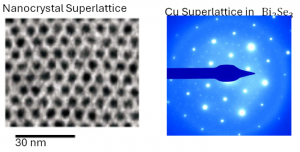
Abstract: Nanomaterials’ reduced dimensionality leads to enhanced quantum effects and increased charge correlations, making them an exciting platform for exploring novel quantum phenomena with application in quantum information processing and quantum computation. Moreover, the tunability of nanomaterials holds promise for achieving quantum properties ‘on demand,’ or a quantum simulator. Our research draws on chemical methods to functionalize the surfaces of and thereby tune low-dimensional materials. In this talk, I will present our work on two distinct systems: semiconductor nanocrystals and atomically thin, two-dimensional materials. First, I will discuss our nano-patterning technique to create a nanocrystal, or “artificial atom,” superlattice that is free of structural defects. We isolate the charge dynamics in a single conductance channel of the superlattice, providing insight into the charge transport mechanism that was dominated by disorder in prior instances of nanocrystal solids. We find indications of long-range Coulomb interactions, which are a precursor to the predicted geometric charge frustration in semiconductor nanocrystal superlattices. Second, I will present our low-temperature, chemical method for adding atom superlattices in the van der Waals gap of two-dimensional materials. This technique is flexible to a wide variety of elements at concentrations as high as 60%. I will present our progress intercalating Fe3GeTe2, Bi2Se3, and ZrTe3. The latter two are motivated by the interplay of charge density waves and superconductivity.
Bio: Tamar Mentzel is an Assistant Professor at the University of California, Riverside in the Departments of Mechanical Engineering and Physics. Her research focuses on expanding the capabilities of low-dimensional quantum materials through chemical functionalization. She holds patents for optoelectronic devices made of semiconductor nanocrystals and for a technique for measuring electrical conductance in extremely resistive materials. Tamar earned her BS in physics and mechanical engineering from Yale University where she was awarded the Deforest Pioneers Prize for distinguished creative achievement in physics. She then earned her Ph.D. in applied physics from Harvard University and delivered the MIT Microsystems Technology Laboratory Prized Annual Doctoral Dissertation Seminar. She was then an APS Blewett Postdoctoral Fellow at Harvard University. She is a recipient of the Hellman Fellowship for junior faculty at the University of California.
Experimental quantum technologies at CBPF: superconducting qubits, quantum communication and quantum sensing
Dr. Alexandre de Sousa : Brazilian Center for Research in Physics (CPBF), Rio de Janeiro
July 7, 2026
📍 Location: Room 0M01 - Department of Physics - Federico II
Abstract: In this talk, we present the Quantum Technologies Laboratoy at the Brazilian Center for Research in Physics (CPBF), Rio de Janeiro. Our research activities encompass the design, fabrication, characterization and control of superconducting quantum devices, as well as the development of protocols and applications for quantum information processing. We also conduct research on quantum communication networks and quantum sensing platforms based on superconducting systems and nitrogen-vacancy (NV) centers in diamonds. The laboratory combines expertise in quantum computing, quantum communication and quantum sensing, addressing both fundamental and applied challenges in quantum technologies. The goal of this presentation is to introduce our ongoing research activities, foster scientific discussions and explore opportunities for future collaborations in this areas.
Cats, chaos, dissipation
Fabrizio Minganti : Alice & Bob (Paris)
May 14, 2026
📍 Location: Room 0M03- Physics Department
Cat states are a promising platform for realizing quantum computers with a low hardware footprint and intrinsic error correction [1].
In this talk, I will describe how engineered dissipation [2] and parametric processes can confine the state of the system and stabilize cat states.
I will discuss recent advances in the control and calibration of these states [3–4], and their potential to enable fault-tolerant quantum computation.
Beyond their role as quantum hardware, these superconducting devices also provide an ideal platform for investigating many-body quantum phenomena in dissipative systems. In particular, I will discuss how the concepts of quantum error correction and phase transitions are connected. Building on a formal framework for analyzing chaos in strongly dissipative quantum systems [5], I will examine the emergence of chaos in these systems and its connection to the degradation of cat-state performance [6].
[1] Mirrahimi et al., New J. Phys. 16, 045014 (2014)
[2] Leghtas et al., Science (2015), Vol. 347, No. 6224
[3] Melo et at., arXiv (2025)
[4] A cat qubit that jumps every hour (blogpost: https://alice-bob.com/blog/just-out-of-the-lab-a-cat-qubit-that-jumps-every-hour/)
[5] Ferrari et al, Phys. Rev. Res. (2025)
[6] Ferrari et al., in preparation
Quantum critical quantum batteries
Niccolò Traverso Ziani : Università di Genova
March 20, 2026
📍 Location: Room 0M03 – Physics Department
Qualitatively speaking, quantum batteries are quantum systems engineered to store and release energy on demand [1]. One‑dimensional arrays of qubits are particularly insightful in this context because they map naturally onto quantum spin chains out of equilibrium. This connection allows one to analyze their charging dynamics using concepts developed for quantum quenches [2] in a context where the quantum battery is naturally many-body.
In this talk, I will discuss how quantum phase transitions and integrability shape the performance of spin‑chain quantum batteries. I will show that in (Jordan-Wigner) integrable systems the quantum phase diagram strongly affects the stored energy at long charging times [3,4]. In contrast, when integrability is broken, even the charging power displays clear signatures of quantum criticality, exhibiting a strong enhancement around the phase transition [5].
[1] F. Campaioli, S. Gherardini, J. Q. Quach, M. Polini, and G. M. Andolina, Colloquium: Quantum batteries, Rev. Mod. Phys. 96, 031001 (2024).
[2] A. Mitra, Quantum Quench Dynamics, Annual Review of Condensed Matter Physics, Vol. 9:245-259 (2018).
[3] R. Grazi, D. Sacco Shaikh, M. Sassetti, N. Traverso Ziani, and D. Ferraro, Controlling energy storage crossing quantum phase transitions in an integrable spin quantum battery, Phys. Rev. Lett. 133, 197001 (2024).
[4] R. Grazi, F. Cavaliere, M. Sassetti, D. Ferraro, and N. T. Ziani, Charging free fermion quantum batteries, Chaos, Solitons & Fractals 196, 116383 (2025).
[5] D. Farina, M. Sassetti, V. Cataudella, D. Ferraro, and N. Traverso Ziani, Charging power enhancement at the phase transition of a non-integrable quantum battery, arXiv:2603.02819.
High fidelity and suppression of measurement-induced state transitions in cosφ-coupling transmon readout
Oliver Buisson : CNRS, Neel Institute (Grenoble, France)
December 9, 2025
📍 Location: Online Meeting (Join Link)
The field of superconducting qubits is constantly evolving with new types of circuit and designs but, when it comes to qubit readout, the use of simple transverse linear coupling is overwhelmingly prevalent. This type of coupling intrinsically limits the readout mode’s dispersive shift and is known to cause Purcell effect. We propose here to overcome these limitations by engineering a non-linear cosϕ-coupling between the transmon qubit and a dedicated readout mode. This is based upon previous published work [1] on qubit readout with a non-perturbative cross-Kerr coupling engineered by a transmon molecule circuit. A new sample with optimized design and parameters shows a readout fidelity of 99.21% measured using a parametric amplifier and a high Quantum Non- Demolition (QND) fidelity of 97% [2]. Interestingly, these results have been achieved with 89 photons in the readout mode. In addition, we have observed suppression of measurement-induced state transitions (MIST) up to high photon counts above 300 [3]. This effect can be explained by the symmetry of the coupling, which is tunable with a magnetic field. All of these measurements were corroborated by a theoretical study, a numerical analysis of the spectra associated with the nonlinearly coupled circuit, and simulations of the corresponding classical dynamics[3].
[1] R. Dassonneville, et al., “Fast high-fidelity quantum nondemolition qubit readout via a nonperturbative cross-Kerr coupling”, Phys. Rev. X 10, 011045 (2020).
[2] C. Mori, et al., “High-power readout of a transmon qubit using a nonlinear coupling”, arXiv 2507.03642 (2025).
[3] C. Mori, et al., “Suppression of measurement-induced state transitions in cos-coupling transmon readout”, arXiv 2509.05126 (2025).